

If you have been notified that you are a V2 REST API partner, please see the User Management guide here.
Overview
User Management is defined as allowing customers to automate creating, updating, and deleting users in the 3rd-party software when an action is taken in Rippling. When a 3rd-party supports User Management, Rippling expects the app to abide by the following requirements.
Rippling's User Management is powered by two workflows:
- Admin Configuration
- Partner API Calls
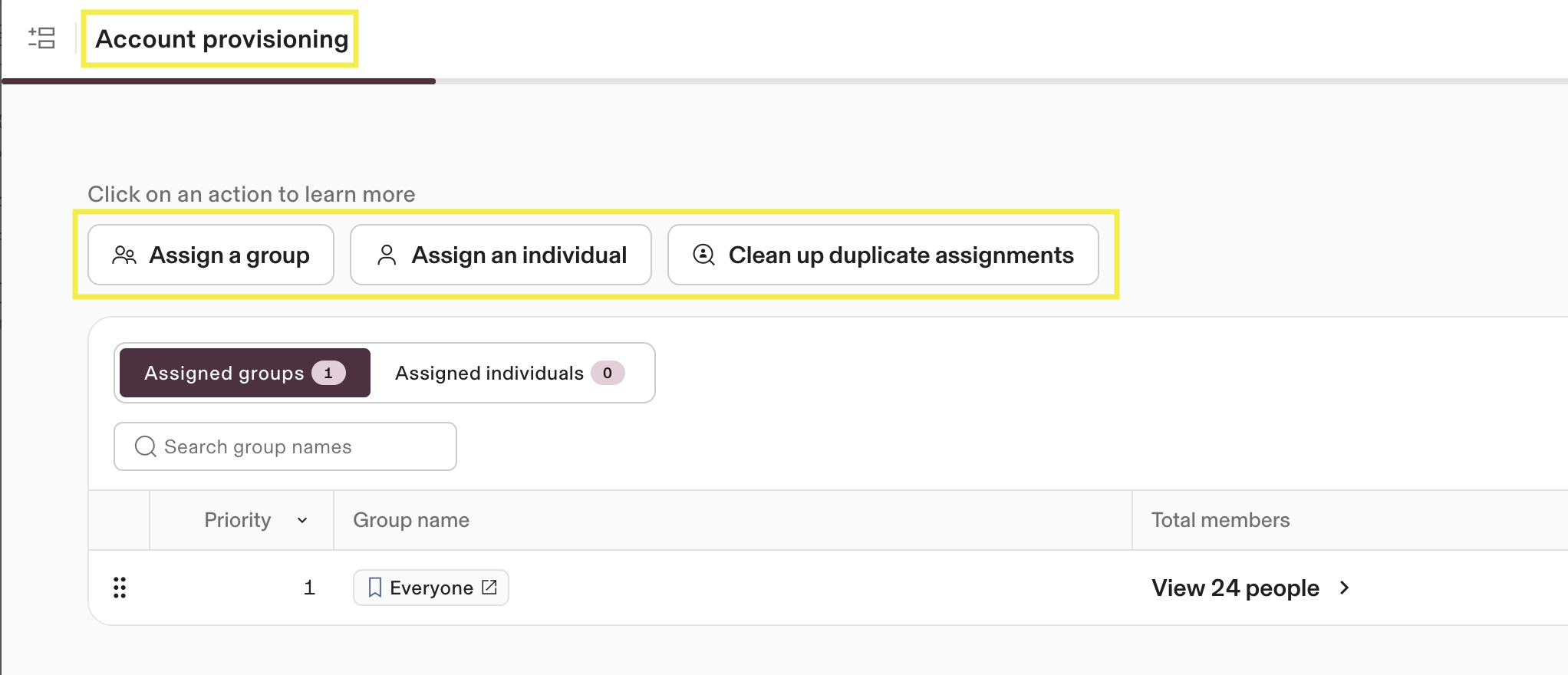
Within each app in Rippling, an admin can configure the account provisioning and provision time settings. This admin configuration is unique to each Rippling company.
The account provisioning setting allows customers to tell Rippling which employees should and should not automatically receive access as users in a third-party application. Admins can configure rules using groupings of employees within their company (e.g. "all full-time employees in the sales department" or "all employees on the product team located in New York").
You can read more about how account provisioning works here (article only accessible to active Rippling customers and partners).
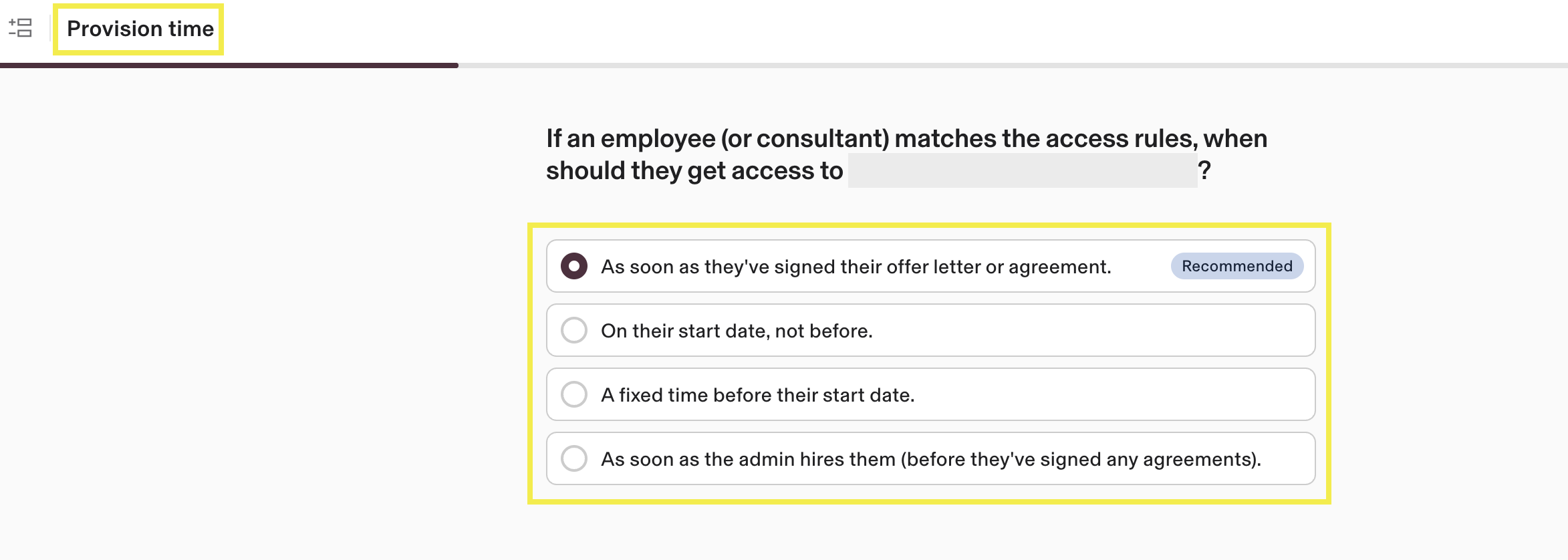
The provision time setting allows customers to tell Rippling when employees should have their user created in the third-party application if they meet the access rules. Admins can choose if they want employees to be set up with a user in the third-party application as soon as they've signed their offer letter, on their start date, on a fixed time before their start date, or as soon as the admin hires them.
You can read more about how provision time settings work here.
Both of these settings, configured by customers, determine which and when employee webhook events are emitted to your webhook URL configured in your app listing. It also determines which employees are returned in the GET Employees endpoint.
This is why it is critical to provision and deprovision users based on the response from the GET Employees endpoint only.
Partners adding User Management as a feature to their integration should use GET Employees to fetch the complete list of all employees who should be created as users in the third-party application. When calling the GET Employees endpoint, partners will only get a list of employees returned who:
- Meet the configured app access rules
- Meet the provision time setting
Partners should not use the GET Employees (Include Terminated) endpoint for user provisioning, as it includes terminated employees in the results. Instead, this endpoint should be used when you need to sync employee data to your software without creating them as users.
If necessary, you can sync data for all employees, whether they are active or terminated, and regardless of whether they have been added as a provisioned user within your application. To achieve this, use the GET Employees (Include Terminated) endpoint and set the optional parameter send_all_roles to true.
Example request:
curl -L -X GET 'https://api.rippling.com/platform/api/employees/include_terminated?send_all_roles=true' \
In using GET Employees to power User Management, it is important to utilize the correct employee identifier when mapping employees in your system. For this mapping, the employee's uniqueId should be used.
The uniqueId is the employee's permanent profile number that will always be unique within the context of that specific company, and will not change even if an individual is rehired within the same company. This is what makes this field the suggested identifier for mapping users in your software.
Requirements
To understand the user management requirements expected from apps in the Rippling App Shop, please navigate to Requirements.
FAQs
If you're a partner seeking answers or encountering difficulties while integrating with Rippling, please contact us at partner.support@rippling.com. Ensure our responses reach you by preventing emails from this address from being filtered into your spam folder.